Once a new roof is finished, nobody sees the underlayment again. But it is one of the most important parts of the whole system, especially in a place like Northeast Florida where wind driven rain is a regular part of storm season.
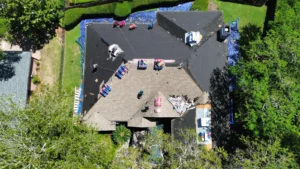
This drone photo was taken partway through a roof replacement. The dark material covering the roof deck is underlayment, and you can see bundles of shingles staged on top, ready to be installed.
What Underlayment Does
Shingles are the first line of defense against rain, but water can still get under them during heavy storms, high winds, or when a shingle is damaged. Underlayment is a water resistant barrier between the shingles and the roof deck. If water gets past the shingles, the underlayment helps keep it from reaching the wood and the inside of your home.
Types of Underlayment
- Synthetic underlayment: lightweight, strong, and resistant to tearing during installation
- Self adhered membrane: often used in valleys, around penetrations, and along eaves where water collects
- Traditional felt: still used in some cases, but less common on modern installations
Many roofs use a combination, with membrane in the most vulnerable spots and synthetic underlayment across the rest of the deck.
Why It Matters in Florida
Our storms do not just bring rain straight down. Wind pushes water sideways and even upward under the edges of shingles. A well installed underlayment adds a second layer of protection for exactly those situations.
Installation Makes the Difference
Good materials only work when they are installed correctly. Overlaps, fastening, and how underlayment ties into flashing and drip edge all matter. Manufacturers also have specific requirements that must be followed for their warranties to apply, and as a GAF Master Elite and Atlas certified contractor, we install to those standards.
If you are comparing quotes for a roof replacement, ask each contractor what underlayment they plan to use and where. It is a good way to understand what you are actually getting.
Other Hidden Parts of a Roof System
Underlayment is one of several components that work together under and around the shingles. Each plays a role in keeping water out.
- Drip edge: metal flashing along the edges that directs water into the gutters
- Ice and water style membrane: extra protection in valleys and around penetrations
- Step and wall flashing: seals the joints where the roof meets walls and chimneys
- Pipe boots: seal around plumbing vents that pass through the roof
- Ridge and soffit ventilation: lets the attic breathe and reduces moisture
Why You Should Ask About It
Two quotes for a roof replacement can look similar on paper but use very different materials under the shingles. Asking what underlayment and flashing are included helps you compare quotes fairly. A lower price sometimes means less protection in the areas you cannot see.
Can Underlayment Fail?
Underlayment that is exposed to sun for too long, installed with gaps, or not lapped correctly can lose its effectiveness. On older roofs, it can also break down with age. That is one reason a full replacement includes new underlayment instead of laying new shingles over old material.
Storm Season Protection
After a strong storm, a roof may lose a few shingles. A good underlayment can help limit water getting in until the roof is repaired. It is not meant to replace shingles, but it gives your home an extra layer of defense when you need it most.
Frequently Asked Questions
Is underlayment required?
Yes. Building codes and shingle manufacturers require underlayment on shingle roofs.
Is synthetic better than felt?
Synthetic underlayment is lighter, stronger, and more resistant to tearing, which is why it is widely used today.
Can you reuse the old underlayment?
No. During a replacement, the old underlayment is removed with the shingles and new material is installed.
What We Look For During a Tear Off
When the old roof comes off, we get our first real look at the deck and the old underlayment. That view tells us a lot. Dark or stained wood can point to past leaks. Brittle or torn underlayment shows how long the old roof was relying on its last layer of defense. Rusted nails and soft spots around vents or chimneys reveal where water has been getting in.
We use what we find to make sure the new roof addresses any trouble spots, not just covers them. If decking needs to be replaced, we will show you and explain why before moving forward.
That attention to the hidden layers is a big part of what separates a roof that lasts from one that develops problems a few years down the road.
Have questions about your roof? Call LePierre Roofing at (904) 277-3000 or request a free estimate and we will be glad to take a look.